
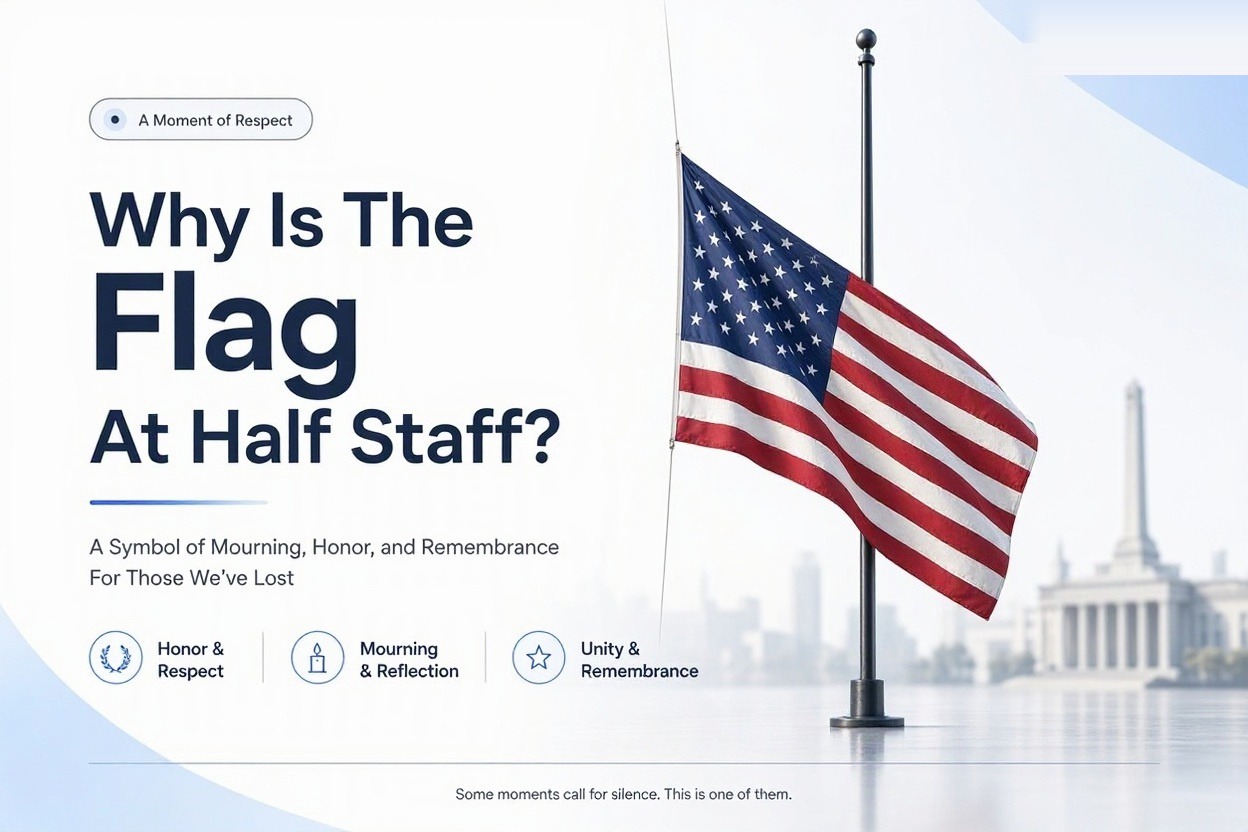
If you searched for why is the flag at half staff today, you likely saw a lowered flag and wanted a reason. In most cases, it signals mourning after the death of a prominent leader, service member, or victims of tragedy. Orders usually come from the president or a governor.
Flags are lowered to honor lives lost and to show collective respect during periods of grief. A national order applies to federal buildings and military posts across the country. A state order may apply only within that state, which often creates confusion for residents.
You may see different flags lowered in one town while nearby areas look unchanged. That difference usually reflects who issued the order and where it applies. Checking official proclamations is the fastest way to confirm the cause, the honoree, and how long the tribute will last.
This guide explains the traditions, rules, and timelines behind lowered flags. You will learn who can authorize the honor, how to verify current orders, how to display the flag correctly, and what to do when you notice it flying low.
The Meaning Behind Half Staff Flag Display
The lowered flag is a long held gesture of sorrow, respect, and national unity. It tells the public that the country or state is pausing to honor someone who served or lives lost in tragedy. The visual shift from full staff draws attention without words.
A Traditional Sign of Mourning and Respect
This custom dates back centuries to naval and military traditions in Europe. Lowering the flag creates space above it, said to represent the invisible flag of death flying overhead. The United States adopted the practice to mark mourning with dignity and order.
Modern use follows formal proclamations rather than personal choice. Federal agencies, state capitols, schools, and post offices lower flags when directed by proper authority. Private citizens and businesses may join voluntarily to show solidarity and respect for the honoree.
Who Can Order Flags to Half Staff
Many people wonder why is the flag at half staff when no national news seems obvious. The answer often lies in authority levels. Only certain officials can issue binding orders, while others may encourage voluntary participation within their jurisdiction.
Presidential Authority for National Display
The president can order flags to half staff across the country for national mourning. These orders apply to the White House, federal buildings, military installations, embassies, and often public schools. Governors usually follow with matching state orders for consistency.
Governors and Local Leaders
Governors can order flags lowered on state buildings to honor former officials, fallen officers, or victims of local tragedy. Mayors and county leaders generally cannot order federal buildings, but they can direct city owned properties and request community participation through public notices.
Quick Reference for Authority Levels
1. President orders nationwide display for federal properties, military bases, and embassies abroad.
2. Governor orders statewide display for state offices, courthouses, schools, and highway rest areas.
3. Mayor or agency head directs city buildings only and may invite residents to participate.
4. Private homes and businesses may lower flags voluntarily at any time for personal mourning.
Federal Rules for National Mourning Periods
Federal practice is guided by the United States Flag Code and presidential proclamations. While the Code offers guidance, specific dates and durations come from official orders. Those documents name the honoree, the reason, and the exact period of display.
Flag Code Guidelines for Federal Buildings
The Flag Code outlines expected honors after the death of current or former presidents, vice presidents, members of Congress, and Supreme Court justices. Thirty days is customary after a president dies, while shorter periods apply to other federal leaders and officials.
Agencies follow the proclamation language closely for start and end times. Flags are typically lowered from sunrise on the announced day until sunset on the final day. Intermittent holidays, weekends, and special events do not cancel the order unless stated.
State Level Orders and Local Decisions
State orders explain many cases where people search for why is the flag at half staff with no federal announcement. A governor may act after the loss of a state trooper, firefighter, guardsman, lawmaker, or respected public figure with strong ties to the state.
When Governors Issue Their Own Orders
Governors often issue written proclamations posted on state websites and social channels. These notices list the name of the person honored, the flags affected, and the lowering schedule. Some states also maintain email alerts for police, schools, and municipal offices.
Local agencies may extend the honor to city halls, libraries, fire stations, and schools. Federal facilities in the same town may remain at full staff if no national order exists. That contrast is normal and does not mean one group forgot or refused to comply.
How to Verify a State or Local Order
Step One – Visit the governor newsroom or proclamation page and search for flag notices dated this week.
Step Two – Check the city or county homepage for press releases about local memorials and services.
Step Three – Call the county clerk, fire department, or school office if online details are unclear or outdated.
Step Four – Note the start date, end time, and whether private participation was requested by officials.
Common Reasons Flags Fly at Half Staff Today
Current orders often relate to recognizable national moments, though many honors are regional. Knowing the categories helps you interpret what you see and find confirmation faster without guessing or relying on rumors on social media.
Honoring Fallen Service Members and First Responders
Deaths of military members, police officers, firefighters, and emergency personnel frequently prompt half staff orders. States regularly honor those who died in the line of duty with tributes lasting from one day to several days, often through the funeral or memorial service.
Remembering National Tragedies and Public Figures
Mass casualty events, terrorist attacks, school shootings, and natural disasters with major loss of life can trigger national orders. The passing of presidents, former leaders, Supreme Court justices, and prominent national figures also leads to extended periods of mourning and lowered flags.
Honoring Peace Officers Memorial and Special Observances
Certain annual observances include half staff display by law. Peace Officers Memorial Day on May fifteenth, Patriot Day on September eleventh, and Pearl Harbor Remembrance Day on December seventh involve lowered flags. These recurring dates often surprise people who did not expect a tribute.
How Long Half Staff Periods Usually Last
Duration depends on the position of the deceased, the nature of the event, and the wording of the proclamation. Some tributes last only a single day, while mourning for a president can extend for a full month. Always follow the end date in the official notice.
Standard Timeframes for Different Events
Federal tradition sets thirty days for a sitting or former president and ten days for a vice president or chief justice. Members of Congress may receive two days in Washington, while federal buildings in their home state may observe longer. Fallen service members are often honored until burial.
Practical Examples From Recent Practice
Example one – A governor honors a fallen state trooper from announcement until sunset on the funeral day.
Example two – A president honors victims of a mass tragedy for three to five days nationwide.
Example three – Annual memorial days require display only during daylight hours on that specific date.
How to Check Current Half Staff Orders
If you want a fast answer for why is the flag at half staff in your area, start with official sources. Social posts can be outdated or mistaken about location and dates. Government pages provide precise language, coverage areas, and timelines that remove doubt.
Look first at White House briefings for national proclamations and your governor website for state orders. The Department of Defense, Department of Veterans Affairs, and state veterans agencies also post timely notices. Many flag status trackers collect these alerts in one place.
Reliable Sources for Daily Flag Status
State governor proclamation pages give binding details for state buildings and schools. Federal agency newsrooms confirm national dates and affected properties. Local sheriff, fire, police, and city pages explain community specific tributes, funeral processions, and memorial service schedules that affect nearby flags.
Proper Flag Lowering and Display Protocol
Correct handling matters because the tribute should look respectful and consistent. Many errors come from lowering too far, leaving the flag down overnight without light, or forgetting to raise it first to the peak. Small details preserve the dignity of the act.
Correct Way to Lower the Flag
Raise the flag briskly to the peak for a moment, then lower it slowly to the half staff position. The position is generally halfway between the top and bottom of the staff. On the final day, raise it to the peak again before lowering for the day.
Care During Mourning Display
Keep the flag clean, untorn, and properly illuminated if flown at night. Do not let it touch the ground, railings, or foliage during handling. If severe weather threatens damage, bring the flag indoors and return it when conditions improve and the order remains active.
Steps for Homes and Small Businesses
Step One – Read the proclamation to confirm dates, hours, and whether public participation was requested.
Step Two – Hoist the flag to the top, pause briefly, then lower to midway for the mourning position.
Step Three – At the end of each day, either lower and store the flag or keep it lit through the night.
Step Four – On the closing day, raise to full staff at sunset unless the order extends further.
Differences Between Half Staff and Half Mast
The two phrases are often used interchangeably, though tradition assigns them to different settings. Half mast refers to ships and naval stations, while half staff refers to poles on land. In everyday speech, half staff is more common across the United States.
Correct Terms for Land and Sea
Government proclamations usually say half staff for federal buildings, schools, and ground mounted poles. News outlets may still write half mast out of habit, especially for naval losses. Both phrases point to the same lowered position and respectful meaning for most readers.
What to Do When You See the Flag Lowered
A lowered flag invites quiet respect rather than urgent action. You do not need to lower your own flag, but many people choose to match the tribute. If you manage a building, confirm whether the order covers your property before changing the display.
Pause briefly if passing a memorial ceremony or funeral procession near public buildings. Teach children that the lowered flag honors someone who died, using calm and age appropriate words. Avoid photos or loud behavior near active services, cemeteries, or places of worship during the tribute.
Community Participation Checklist
1. Confirm the order source, coverage area, and end date before changing your flag.
2. Lower home flags only if you wish to show support, as private display is voluntary.
3. Keep schools, offices, and associations consistent so the street does not look uneven.
4. Return flags to full staff promptly at the stated time to close the tribute properly.
5. Share the official notice with neighbors to reduce confusion and repeated questions.
Limitations and Common Misunderstandings
Half staff status does not close government offices or cancel classes by itself. It also does not require private citizens to lower their flags, though many do. Some people assume every tragedy triggers a national order, but many honors remain state specific by design.
Damaged, faded, or improperly sized flags should not be used for mourning display. Replace worn flags and ensure the halyard, clips, and lighting work correctly. A well maintained flag communicates respect far better than a hurried gesture with poor equipment.
Troubleshooting Flag Display Issues
If your flag will not stay at mid pole, check for tangled rope, worn cleats, or slipping clips. Lubricate pulleys lightly and replace frayed halyards that slide under weight. For indoor poles or short porch mounts, a mourning ribbon above the flag may be more practical than lowering.
If dates conflict between sources, follow the most recent official proclamation for your location. Federal orders control federal land, while governor orders control state land. When in doubt, contact the building manager, school office, or local veterans post for guidance tied to your address.
Related Observances and Flag Etiquette
Mourning display is part of broader flag etiquette that includes proper folding, storage, retirement, and illumination. Memorial Day has its own rhythm, with flags at half staff until noon, then raised to full staff. Veterans Day generally keeps flags at full staff with ceremonies instead.
Learning these patterns helps you read public symbols with confidence. You will know when a lowered flag reflects fresh loss, a scheduled memorial, or a local farewell. That awareness turns a passing detail into a moment of shared respect and civic connection.
Conclusion
lowered flags carry deep meaning, and the reasons range from national loss to local heroism. Official proclamations provide the clearest answers, including the honoree, dates, and covered buildings. When residents ask why is the flag at half staff, patient checking and respectful display keep the focus on remembrance. Stay informed through trusted notices, maintain your flag with care, and join the tribute in a way that honors both community and country.
Frequently Asked Questions
Why Flags Are Lowered Without Major National News?
Many orders are issued by governors for state level losses that receive limited national coverage. Fallen officers, state leaders, and local tragedies can prompt tributes that affect only state and municipal properties in that area.
How Long a Half Staff Order Usually Remains Active?
Duration varies by honoree and proclamation, ranging from one day to thirty days. Most state tributes last until the funeral sunset, while annual observances last only for daylight hours.
Who Must Follow a Half Staff Proclamation?
Federal orders bind federal properties, while governor orders bind state properties and often schools. Private homes and businesses are encouraged but not required to participate in most cases.
Where to Confirm the Current Flag Status Quickly?
Check the White House briefing page for national orders and the governor website for state orders. Local city pages and sheriff or fire department notices help confirm community level tributes and schedules.
Whether Businesses Should Lower Their Own Flags?
Businesses may lower flags voluntarily to show respect during announced mourning periods. Ensure the flag is in good condition, positioned correctly, and returned to full staff when the official period ends.